Add your promotional text...

Glutamine: The Master Regulator of Plant Embryonic Growth
Brendan M. O'Leary, Suvi Honkanen, Vinti Kumari, Christoph Rampitsch, Eiji Nambara, A. Harvey Millar
RESEARCH ARTICLE
12/23/20251 min read
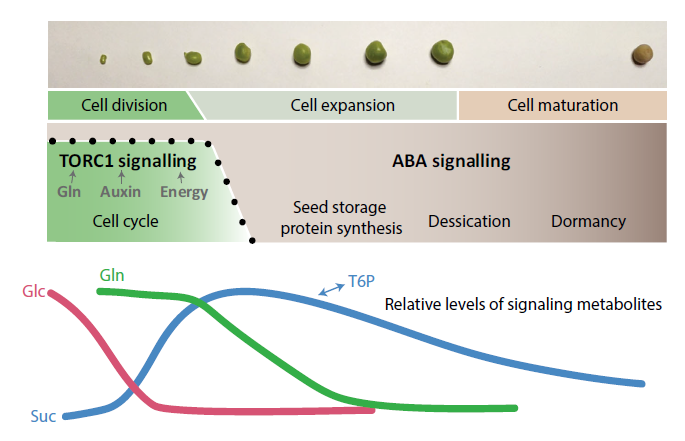
In nature, plants must constantly sense and respond to fluctuating nutrient availability to optimize their growth and reproductive success. Among the essential nutrients, nitrogen stands out as a critical limiting factor that directly impacts crop yields worldwide.
While scientists have long understood that nitrogen availability affects plant development, the specific molecular mechanisms linking nitrogen perception to growth regulation in plant embryos remained a fundamental mystery. How exactly do developing plant embryos sense nitrogen status and translate this information into growth decisions?
Researchers investigating developing pea embryos discovered that glutamine serves as the primary amino acid signal activating the Target of Rapamycin (TOR) pathway—a central regulator of cellular growth and metabolism. By cultivating embryos in vitro under precisely controlled nutrient conditions, they demonstrated that glutamine specifically triggers TOR activation measured through S6K phosphorylation, while other amino acids showed negligible effects. Furthermore, inhibiting glutamine synthesis dramatically reduced protein synthesis rates, an effect that could be rescued only by glutamine supplementation.
This discovery reveals a critical nutrient-sensing mechanism in plants analogous to but distinct from mammalian systems, establishing glutamine as a molecular bridge between nitrogen availability and growth regulation. The findings provide a mechanistic framework for understanding how plant embryos monitor their nutritional environment and adjust their developmental programs accordingly.